
Process
How coconut sugar is made from coconut sap, step by step
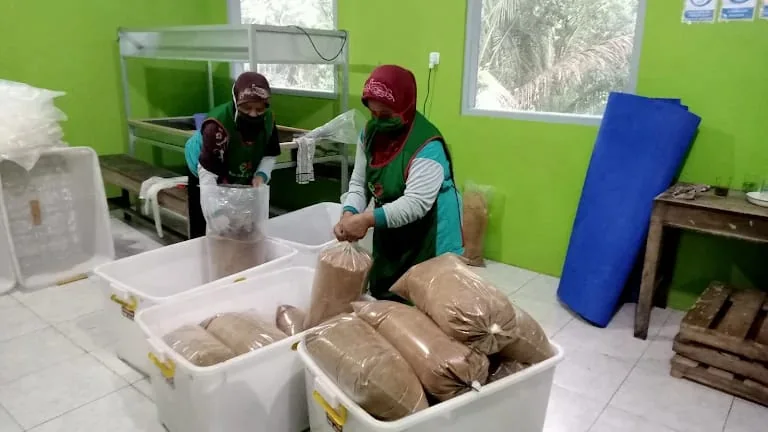
Making coconut sugar is not a complicated recipe, but it is not a job you can walk away from either. From the morning tapping to dry grain the whole process takes about four to six hours, and two of those demand that you stand at the wok and stir without stopping.
This article describes the process as we run it every day, including the part no tutorial mentions: when to lower the flame, and why a batch sometimes refuses to crystallise at all.
Equipment and ingredients
| Item | Note |
|---|---|
| Fresh coconut sap | 10 litres yields roughly 1–1.3 kg of coconut sugar |
| Large wok | Iron or stainless steel, at least twice the volume of the sap |
| Wood-fired stove | High heat at the start, low at the end — a gas burner works too |
| Cloth strainer | To remove debris and insects that fall into the container |
| Cooking thermometer | Up to 150 °C. This is the tool that saves the most failed attempts |
| Wooden stirrer | Long handle, thicker at the end |
| 18 mesh sieve | Sets the grain size |
| Drying trays | Lined with baking paper or clean cloth |
1. Tapping the sap
The sap comes from the male flower stalk of an coconut palm whose tip has been cut. Tapping happens twice a day, around 05:30 and 16:00. A single stalk yields 1–3 litres per tapping.
What has to be guarded: sap begins fermenting within hours. Containers must be clean and covered, and some makers add a little slaked lime to hold back the acidity. Sap that already smells sharp and foams heavily is better left unused — the result will taste sour and go dark.
A practical ruleSap should be in the wok within four hours of tapping at most. Beyond that the flavour starts moving from sweet to sour, and you cannot fix it at any later stage.
2. Straining and measuring
Strain the sap through clean cloth to remove debris, wood dust and insects. Then measure the volume — you need the yield figures to work out your selling price later.
A normal coconut yield is around 10–13%. That means 10 litres of sap becomes 1–1.3 kg of coconut sugar. If your result is far below that, the usual causes are sap thinned by rain, or too much lost as it boiled over.
3. Boiling down
Bring the sap to a hard boil. Skim off the brown foam that rises to the surface so the sugar does not taste scorched. Once the volume has fallen by about half, lower the heat.
The guide is temperature, not time: cook until the liquid reaches 110–115 °C. At that point the remaining water content is low enough to crystallise. Without a thermometer, watch for these signs:
- Large bubbles turn into small, tight ones.
- The syrup drips slowly off the stirrer, like thick syrup.
- Steam coming off has dropped sharply compared with the start.
4. Stirring as it crystallises
This is the decisive stage. Once the heat is off, the syrup is still hot and liquid. Keep stirring with the wooden paddle. After a few minutes it begins to feel “grainy” and the colour shifts from clear brown to milk chocolate. At that point crystallisation has begun.
The moment that sign appears, stir faster and without pause until the whole batch has set into grains. Stop stirring and it will solidify into one large lump.
The opposite mistake — stirring fast from the very beginning, before the grainy sign appears — is also a problem: the sugar crystallises too quickly and the grain comes out coarse and uneven.
5. Sieving and drying
Sieve the cooled sugar through an 18-mesh screen. What passes is the main product; what is held back can be re-milled or sold as coarse sugar.
Dry it on trays at 50–60 °C for two to three hours, or in morning sun for a day. The aim is to bring moisture 2%. Sugar that is still damp will clump inside the pack and grow mould within weeks.
6. Packing
Pack it once it is completely cold. Packed warm, water vapour gets trapped and condenses on the inside of the bag. Thick ziplock pouches or foil bags are the safest choice for long-distance shipping.
When it fails, it is usually here
| Symptom | Cause | Fix |
|---|---|---|
| The batch sets into a lump | Stirring stopped once crystallisation started | Not repairable. Melt it again with a little water and repeat the stirring stage |
| It never crystallises | Temperature too low, or sap too thin | Keep cooking to 115 °C |
| Grains clump after packing | Moisture too high | Dry again, and never pack while warm |
| Sour taste | Sap left too long before cooking | Not repairable. Sap must be processed within four hours of tapping |
| Colour far too dark | Heat too high at the end, or a crusted wok | Lower the heat earlier and stir all the way to the base |
Why factory product is more uniform
Factory coconut sugar can be very consistent because it uses mechanical stirrers, cabinet dryers and temperature controllers. A home workshop relies on hands and eyes, so colour and texture differing slightly between batches is normal — and it is not a sign of poor quality.
What you should question is coconut sugar from a small maker whose colour is identical all year round. Nature does not work that evenly.
No need to cook it yourself.
We do it every day. Order direct, or stop by to watch the process if you are passing through Banjarnegara.