
Health
Coconut sugar benefits: what is proven, what is only claimed
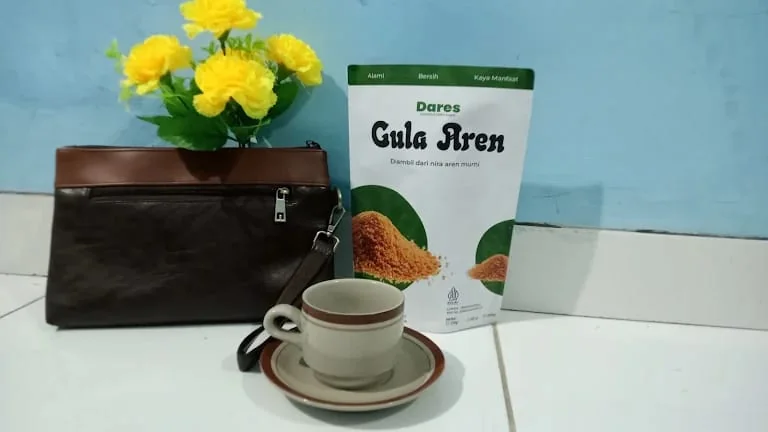
We sell coconut sugar, so you are right to be suspicious of this article. That is why we have drawn the lines clearly: what has research behind it, what is still an estimate, and what simply should not be claimed at all.
Not medical adviceCoconut sugar is still sugar. If you have diabetes, are pregnant, or follow a special diet, talk to your doctor or dietitian before making it your daily sweetener.
First: the calories are about the same
Per 100 grams, coconut sugar contains roughly 370–380 kcal — effectively level with white sugar. Coconut sugar is not a low-calorie sweetener and will not make anyone lose weight. Anyone claiming otherwise is selling something, not explaining it.
What makes it different is not the calorie count but two things: the glycaemic index and the minerals left over from the sap.
Glycaemic index: the most quoted number
The glycaemic index (GI) measures how quickly a food raises blood sugar. Sucrose, or table sugar, has a GI of around 65. Several studies report coconut sugar in the 35–50 range, and coconut sugar crystals are often quoted with similar figures.
That makes chemical sense: coconut sugar contains more reducing sugars (free glucose and fructose) plus a little inulin fibre, so it is absorbed differently from pure sucrose.
But there are three caveats rarely mentioned in advertising:
- The figure varies between studies. Test method, sap type and cooking method all affect the result. There is no single number that applies to every coconut sugar.
- A low GI is not permission to eat more. Glycaemic load — GI multiplied by carbohydrate amount — still rises with a large portion.
- Individual responses differ. Two people can produce different numbers for the same food.
The minerals left behind
Unlike cane sugar, which is refined down to almost pure sucrose, coconut sugar goes through no refining. As a result some of the minerals from the sap remain. The ones most often cited:
- Potassium — the most notable among them.
- Magnesium and calcium — in small amounts.
- Iron and zinc — trace only, not a meaningful source.
The portion sizes matter: to get a meaningful mineral intake from coconut sugar you would have to eat an amount of sugar that is itself inadvisable. The contribution is statistically real but nutritionally small. Treat it as a bonus, not a reason.
Inulin and fibre
Coconut sap contains inulin, a soluble fibre also found in garlic and chicory. Some of it survives cooking and crystallisation. Inulin is a prebiotic — food for the beneficial bacteria in the gut.
The inulin content of coconut sugar is very small, usually under one percent. So the prebiotic benefit is real in theory but will not register from a teaspoon in your coffee.
What nobody should claim
- That coconut sugar cures or prevents diabetes.
- That coconut sugar is freely safe for people with diabetes.
- That coconut sugar can replace any medicine or medical therapy.
- That coconut sugar does not raise blood sugar.
If you find a seller writing any of those four sentences, it tells you they value the sale above accuracy.
A sensible upper limit
The World Health Organization recommends keeping added sugar below 10% of daily energy, ideally below 5%. For an adult on 2,000 kcal that works out at 50 g and 25 g per day.
Coconut sugar counts toward that number. One heaped teaspoon is about 5 g, so a 25 g limit is roughly five teaspoons a day — including the sugar hidden in sauces, cakes and packaged drinks.
So who does coconut sugar make sense for
- People who want to cut refined sugar without switching to artificial sweeteners.
- Café owners looking for a sweetener with a different story and flavour.
- Bakers who want caramel notes without adding a sugar syrup.
- Anyone cooking for a family who prefers an ingredient with a traceable process.
If your goal is to bring blood sugar down, swapping white sugar for coconut sugar in the same quantity will not help much. What helps is reducing total sugar.
In short
Coconut sugar has a lower glycaemic index and more minerals than white sugar. That is a real advantage, but a small one. Coconut sugar is not a medicine and not a risk-free sweetener — it is still sugar, and it still needs limiting.
If you want to make sure what you are buying is genuinely pure coconut sugar rather than a blend, read our guide to five simple kitchen tests.
Not sure it suits you yet?
Start with 250 g. We would rather have a customer who tries it first than one who is disappointed after buying a kilogram.