
Region
Coconut sugar from Banjarnegara: why coconuts thrive in Gumelem Kulon
Banjarnegara regency runs from the hot Serayu river valley up to the Dieng plateau. Our sugar comes from Gumelem Kulon in Susukan district — a valley at around 300 metres with volcanic soil and steady rainfall, which is what the coconut palm likes.
Coconuts need heat and rain, not rich soil
The coconut palm is most productive from sea level up to about 500 metres, at an average of 27 °C and 1,500–2,500 mm of rain a year. It does not demand fertile ground — in Gumelem Kulon the palms grow in volcanic soil carried down from the Dieng highlands by the river.
In Susukan district and the ones around it, almost every yard has a few palms. For many families there the tree works like a savings account: it can be tapped whenever an urgent need arrives.
How weather changes the sap
The sugar content of sap depends heavily on rainwater. In the dry season the sap is thicker and the yield rises — 10 litres can produce 1.3 kg of sugar. In the rainy season the sap is thinner because the tree takes up more water, and the result drops to about 1 kg.
That is why coconut sugar from a single maker always varies in colour between seasons. Dry-season batches are lighter and more yellow; rainy-season batches are darker. Regular buyers often watch for that difference as a sign the sugar really was processed from fresh sap rather than blended.
Local termsIn Banjarnegara, coconut sap is called legen, and the act of tapping is nyadap. Sugar makers are often called penderes.
From block sugar to crystals
Until about a decade ago nearly all coconut sugar from Banjarnegara was moulded in coconut shells and sold to collectors at a price the collector set. The block form made long-distance shipping awkward: heavy, space-hungry and easily broken.
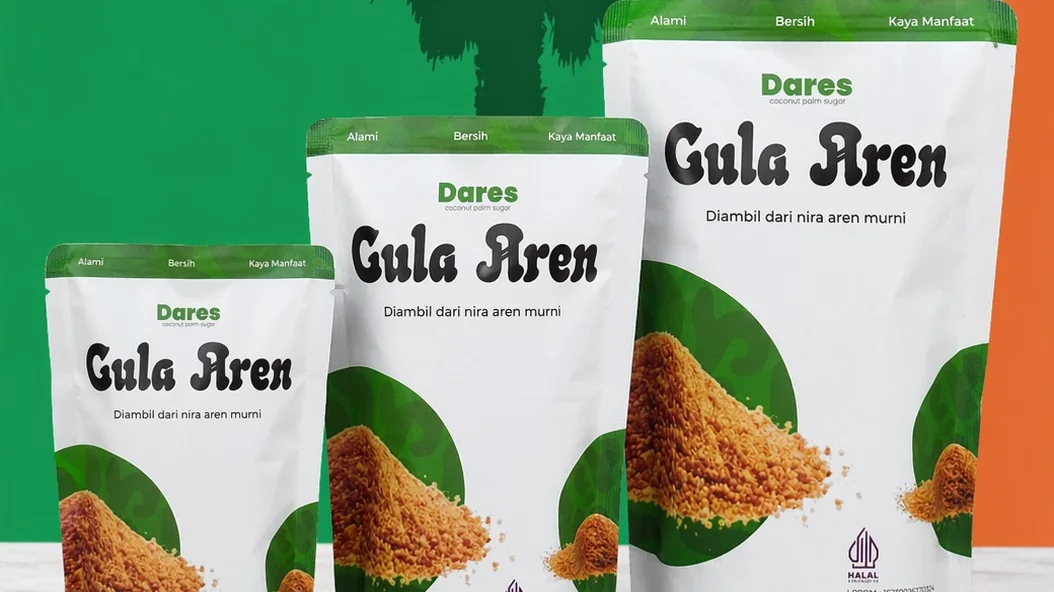
Crystals changed that. The grain form is lighter per volume, does not break in transit, and can be sold directly to coffee shops and bakeries outside Java. Since then many makers in Gumelem Kulon have switched — including our partner makers.
A problem nobody has solved
One thing rarely mentioned in coconut sugar marketing: the trees regenerate slowly. An coconut palm only starts producing sap at six to ten years old. Meanwhile many palms on the slopes are already old, and not every young person is willing to plant replacements when the return is a decade away.
Some farmer groups in Banjarnegara have started planting coconut seedlings on unused sloping land. It is not a quick fix, but it is the only way coconut sugar from this region will still exist twenty years from now.
Recognising sugar from this region
Physically there is no mark that distinguishes Banjarnegara coconut sugar from elsewhere just by looking. What you can examine is the trail behind it:
- A clear maker name and hamlet of origin, not just a city name.
- Willingness to send photos of the grove or the cooking.
- Colour that varies between purchases, in step with the season.
- A sweetness that finishes with caramel rather than the sharp sweetness of white sugar.
We do not claim Banjarnegara coconut sugar is better than sugar from Blitar, Wonogiri or Banyumas. What makes it different is the altitude of the grove, the palm variety and the cooking method — and you can judge for yourself whether that difference matters.
If you would like to visit
Many makers around Susukan take visitors, but not all are comfortable with unannounced arrivals. The etiquette is simple: let them know a day ahead, come in the morning while the cooking runs, do not photograph without asking, and buy something even if only a small amount. A visit with no purchase feels like an inspection.
From the town square in Banjarnegara, the drive to Susukan takes about 40 minutes. The road is paved all the way to the hamlet, though the last stretches are narrow and steep.
Ordered from Gumelem Kulon.
We ship across Indonesia and abroad. Tell us your city and we will work out the shipping before you decide.